

The UAE’s fast-growing real estate sector has made renting a common choice for residents and businesses alike. However, with thousands of rental agreements signed every year, disagreements between tenants and landlords are inevitable.
Issues such as rent increases, maintenance responsibilities, security deposit deductions, or eviction notices can quickly turn into a rental dispute in the UAE if not handled correctly.
Understanding your legal rights and the proper process for resolving rental disputes in the UAE is essential for both parties.
At Logic Way, we assist individuals and businesses in navigating tenancy disputes in the UAE, ensuring compliance with local laws while working toward fair and effective solutions.
Understanding Rental Disputes in the UAE
A landlord-tenant dispute in the UAE typically arises when one party believes the other has violated the rental agreement or failed to fulfil legal obligations.
Common rental disputes include:
- Rent increase disagreements not aligned with UAE regulations
- Delayed or unpaid rent payments
- Maintenance and repair responsibilities
- Security deposit deductions
- Early termination of rental agreements
- Illegal eviction notices
- Property damage claims
These disputes often arise from misunderstandings about the rental contract or a lack of awareness of tenantand landlord rights in the UAE.
Fortunately, the UAE has established structured legal mechanisms to resolve such conflicts in a fair and transparent manner.
Also Read Criminal Complaint Procedure in Dubai: What You Need to Know in 2026
Tenant Rights in the UAE
Tenants in the UAE are protected by rental laws that regulate leasing relationships and prevent unfair treatment. Some key tenant rights in the UAE include:
- Protection Against Unlawful Rent Increases
Landlords cannot arbitrarily increase rent. In many emirates, rent increases must follow official rent index guidelines and proper notice periods.
- Proper Notice Before Eviction
Landlords must provide legal notice before eviction, usually through a written notice period as required by law.
- Maintenance Responsibilities
While tenants must maintain the property responsibly, major structural repairs are typically the landlord’s responsibility unless stated otherwise in the contract.
- Security Deposit Protection
Landlords must return the tenant’s security deposit after deducting legitimate repair costs, if any.
Understanding these rights helps tenants protect themselves when facing a rental agreement dispute in the UAE.
Landlord Rights in the UAE
Landlords also have clearly defined rights to protect their property and financial interests.
- Right to Receive Rent on Time
Tenants are legally obligated to pay rent according to the terms outlined in the tenancy agreement.
- Right to Compensation for Property Damage
If the tenant causes damage beyond normal wear and tear, landlords may deduct repair costs from the security deposit.
- Enforcement of Contract Terms
Landlords can pursue legal action if tenants violate the tenancy agreement.
Knowing these landlord rights in the UAE ensures landlords can address disputes through legal channels rather than informal conflicts.
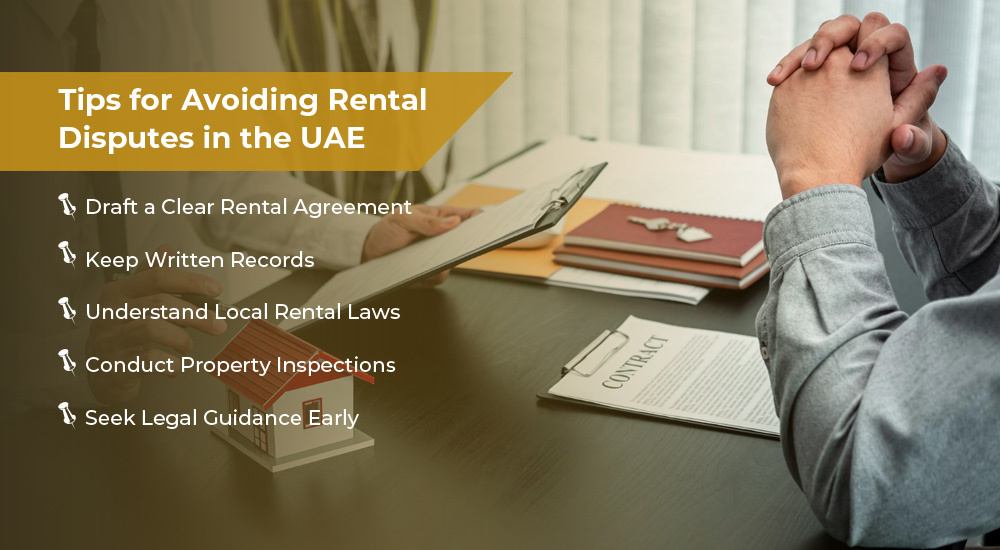
Tips for Avoiding Rental Disputes in the UAE
Prevention is always better than litigation. Both landlords and tenants can reduce the risk of landlord-tenant disputes in the UAE by following a few best practices.
- Draft a Clear Rental Agreement
A detailed tenancy contract helps prevent misunderstandings regarding rent, maintenance, deposit terms, and contract termination.
- Keep Written Records
Document all communications, rent payments, and maintenance requests. These records can be valuable evidence in case of a rental agreement dispute in the UAE.
- Understand Local Rental Laws
Rental regulations vary slightly between emirates, so both parties should be aware of the legal framework governing their property.
- Conduct Property Inspections
Before and after tenancy, inspections help determine property conditions and prevent deposit disputes.
- Seek Legal Guidance Early
Consulting a tenancy dispute lawyer in the UAE at the first sign of conflict can prevent costly legal proceedings later.
Rental disagreements can quickly escalate if not addressed properly. Understanding your rights and following the correct legal process is key to achieving a fair outcome.
If you are facing a rental dispute in the UAE, seeking professional assistance can make all the difference.
Logic Way provides reliable rental dispute legal help in the UAE, helping tenants and landlords resolve conflicts efficiently and in accordance with UAE law.
Contact Logic Way today to get expert guidance and support for resolving your tenancy disputes with confidence.
Also Read: How to Resolve Cheque Bounced Issues in the UAE: Legal Steps & Best Practices
Frequently Asked Questions
A rental dispute in the UAE occurs when a disagreement arises between a landlord and tenant regarding the terms of a tenancy agreement. Common issues include rent increases, unpaid rent, security deposit deductions, maintenance responsibilities, eviction notices, or breach of contract.
A tenancy dispute in the UAE can often be resolved through direct communication between the tenant and landlord. If the issue remains unresolved, parties may seek mediation, legal consultation, or file a case with the relevant rental dispute authority in the emirate where the property is located.
Tenant rights in the UAE include protection from unlawful rent increases, the right to proper notice before eviction, fair treatment regarding security deposit deductions, and access to necessary property maintenance.
Landlord rights in the UAE include receiving rent payments on time, enforcing the terms of the tenancy agreement, claiming compensation for property damage caused by tenants, and initiating eviction proceedings if tenants violate contract terms or fail to pay rent.